
What to Expect at Your First Private Pilates Session
· By Bruna Felix Costa
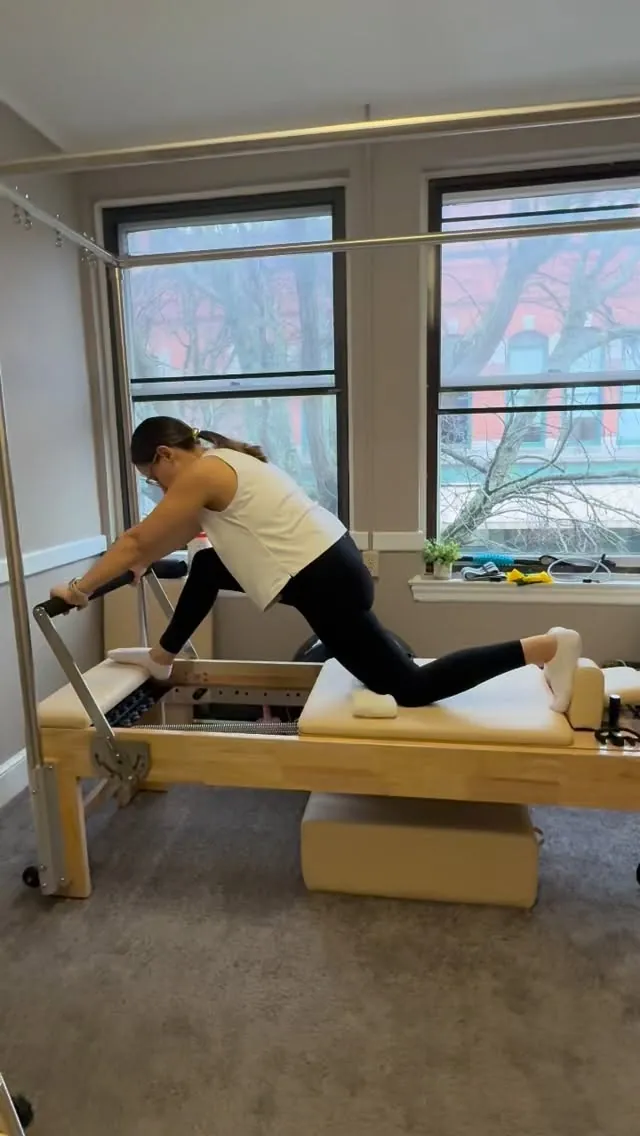
Walking into a Pilates studio for the first time can feel like a lot. The equipment looks unfamiliar, with springs, straps, bars and a sliding carriage, and it is easy to wonder whether you are flexible enough, strong enough or simply ready. The good news is that a private session is built for exactly this moment. There is no class to keep up with and nobody watching except your instructor.
This guide walks through what usually happens in a first private Pilates session, how the main apparatus feels, what to wear, and a few simple ways to get more from your first hour on the Reformer. It is written from our studio in Lowell, but most of it applies to any good private Pilates practice in Greater Lowell or beyond.
Why start with a private session
Group reformer classes are popular, and they can be a great fit once you know the basics. For a beginner, though, a group class moves at the pace of the room. The instructor has to watch several bodies at once, cues are general, and it is hard to ask a question in the middle of a sequence.
A private session flips that around. Every exercise, spring setting and progression is chosen for you, and your instructor can see your alignment and breathing the whole time. If something pinches, you stop and adjust. If something feels easy, you move on. Many people find they learn the core ideas of Pilates, like breathing, control and moving the spine one segment at a time, much faster this way.
If you would rather train with a friend or partner, a duet session is a middle ground. Two people share the session and the instructor still stays close, which works well when both of you have similar goals and a similar starting point.
It starts with a conversation
A good first session does not begin on the equipment. It begins with talking. Expect questions about your routine, your work, how active you are, what you want from Pilates and how your body feels day to day. Back pain after long hours at a desk, stiffness in the hips, a wish to feel stronger after having a baby or simply wanting to move better as you get older are all common reasons people come in.
This is also the time to mention anything your instructor should know: an old injury, chronic pain, a recent surgery or a pregnancy. If you are recovering from an injury or a procedure, check with your doctor or surgeon before you start and bring their guidance with you. Pilates can be adapted to many situations, but it should always respect what your medical team has told you.
Nothing you share here is a test. The goal is simply to plan a session that fits your body, your goals and your limits from the very first exercise.
Meeting the apparatus
Most private sessions use the classical Pilates apparatus. The one people know best is the Reformer: a padded carriage that slides along a frame, connected to springs that you push and pull against. The springs can make an exercise harder or, just as often, give you support so you can find the right position. Lying down on the carriage for your first footwork series is usually the moment people relax and realize it is less intimidating than it looked.
The Cadillac, also called the trapeze table, is a raised mat with a frame above it, bars and springs attached at different heights. It allows a lot of supported work, which makes it useful for beginners and for people who need extra help finding a movement. The Ladder Barrel is a curved barrel next to a short ladder, used for stretching and for strengthening the back and the side body.
In a first session you will not try everything. Your instructor will pick a few simple exercises, explain each one before you do it, set the springs for you and watch how you move. Expect to hear cues about breathing and about keeping the movement small and controlled. In Pilates, quality matters more than how many repetitions you do.
What to wear and bring
Wear fitted, comfortable clothes that stay in place when you lie on your back, roll or lift your legs. Leggings or fitted shorts and a top that will not slide over your face are ideal. Very loose clothes can get caught in springs and straps.
Pilates is done without shoes, so grip socks are a good idea for feeling steady on the carriage and the floor. Bring water and a hair tie if you need one. Leave zippers, belts, buckles and long jewelry at home, since they can catch on or scratch the equipment.
How you might feel afterward
Many people are surprised by how much they worked in a session that never felt frantic. It is common to feel muscles you do not usually notice, like the deep abdominals, the back of the legs or the muscles around the shoulder blades. Some people feel taller, looser or simply calmer after focusing on their breath for an hour.
Mild soreness the next day is normal, especially if you are new to exercise. Sharp pain is not, and it is worth telling your instructor about at your next session so the plan can be adjusted.
At the end of the session, expect a short conversation about what felt good, what to work on and how often to come. Many people start with one or two sessions a week, but the right rhythm depends on your goals and your schedule.
Getting the most out of the first few sessions
Be honest about how things feel. Your instructor can only adjust what they know about. If an exercise is uncomfortable, confusing or too easy, say so. That feedback is what makes a private session worth it.
Focus on the basics: breathing, keeping your movements controlled, and noticing where your body is in space. These ideas are the foundation of every exercise that comes later, from footwork on the Reformer to more challenging work on the Cadillac.
Booking your first session in Lowell or Chelmsford
At Inspire Pilates Studio, every session is private or duet and by appointment, at our studio in downtown Lowell or our Pilates space in Chelmsford, inside CrossFit Liberator. A trial class is available for new clients, and we share current rates when you reach out.
To book, send the form on our site or a WhatsApp message with your goals and anything we should know about your body. You can also read our page on what to expect as a new client for a short checklist before you come.
Frequently asked questions
- Do I need to be flexible to try Pilates?
- No. Flexibility is something Pilates helps you build, not something you need before you start. A private session is planned around your current mobility, and exercises are adjusted with springs and props so you can do them comfortably.
- Is a private Pilates session good for complete beginners?
- Yes. It is often the easiest way to start, because your instructor can explain each exercise, set the equipment for you and correct your form in real time, without the pace of a group class.
- Can I do Pilates if I have back pain?
- Many people with back discomfort practice Pilates, but it is best to check with your doctor first, especially if the pain is new, severe or comes with other symptoms. Tell your instructor about it so the session can be adapted to you.
- How often should I do private Pilates as a beginner?
- Many people start with one or two sessions a week. Your instructor can suggest a rhythm based on your goals, your schedule and how your body responds in the first few sessions.
Related services
Found this helpful? Make us a preferred source on Google.
Ready to book your session?
Private, duet and mat Pilates by appointment in Lowell and Chelmsford, MA. We reply personally.