
Reformer vs Mat Pilates for Beginners: Where Should You Start?
· By Bruna Felix Costa
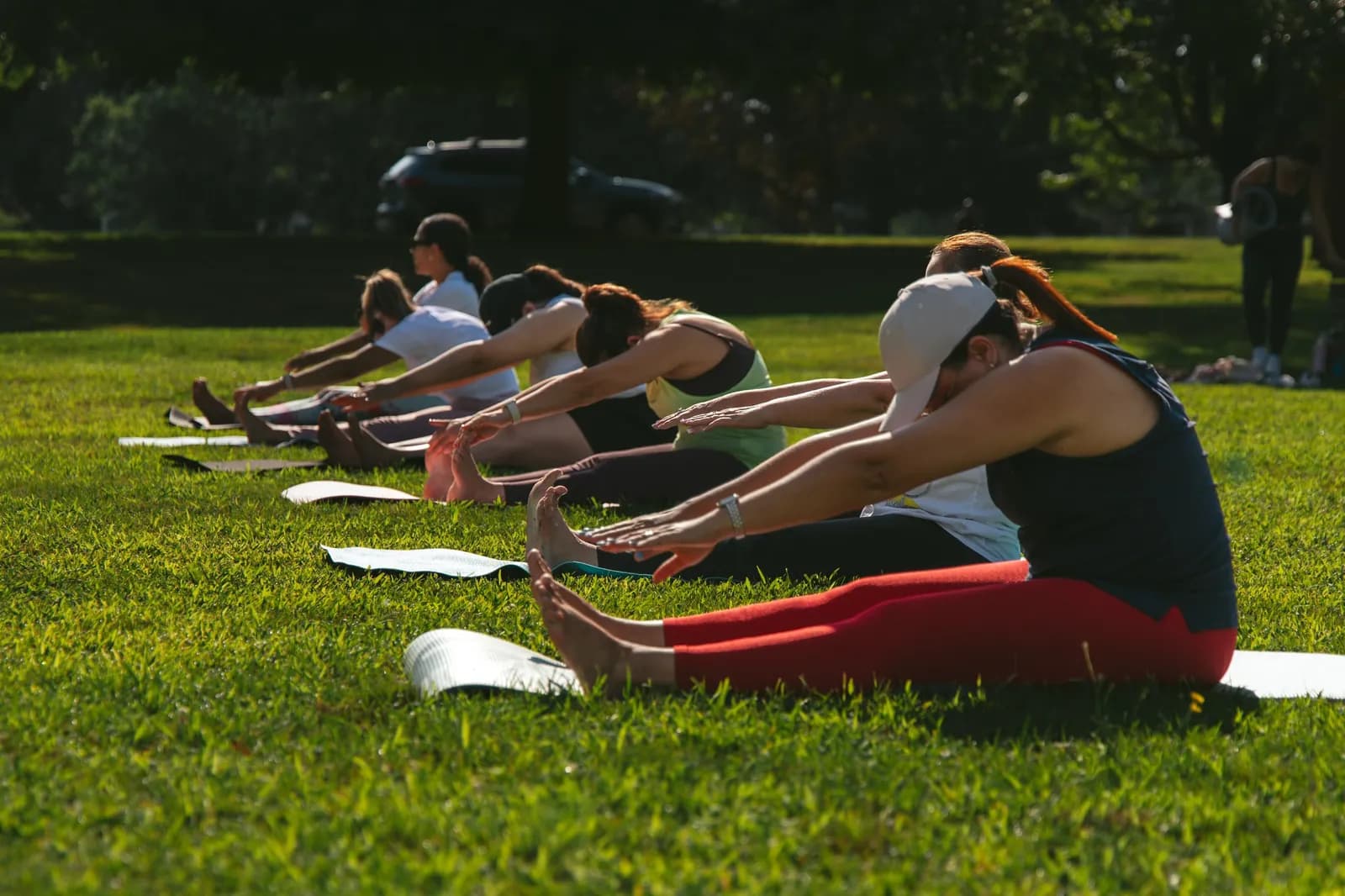
Pilates comes in two main forms: work on the classical apparatus, led by the Reformer, and work on the mat. Both come from the same method and share the same principles of breathing, control, precision and a strong, supported center. They feel quite different, though, and beginners often wonder which one to try first.
This guide explains what reformer Pilates and mat Pilates are like for someone who has never done either, the honest pros and cons of each, and how to pick a starting point that suits your body. At Inspire Pilates Studio we teach both: private and duet sessions on the Cadillac, Reformer and Ladder Barrel, plus Mat Pilates group classes of up to five people.
What reformer Pilates feels like
The Reformer looks like a narrow bed with a padded carriage that slides back and forth along a frame. Springs connect the carriage to the frame, and you push or pull against them with your legs, arms or whole body. A footbar, straps and a headrest let you work lying down, sitting, kneeling or standing.
Here is the part that surprises beginners: the springs do not only make things harder. They also support you. A spring can help you hold a position you cannot yet hold alone, or guide your leg through a smooth path. That is why the Reformer is often an easier entry point for people who feel weak, stiff or unsure of their balance.
The Reformer also gives clear feedback. If you push unevenly, the carriage tells you. If you rush, the springs snap back. Over time this teaches control without your instructor needing to say a word.
The other classical apparatus
Many studios that teach reformer Pilates also use the rest of the classical equipment. The Cadillac, also called the trapeze table, is a raised mat with a frame above it, bars and springs at different heights. It allows a lot of supported work, which helps beginners and people who need extra help finding a movement. The Ladder Barrel is a curved barrel next to a short ladder, used for stretching the hips and spine and strengthening the back and side body.
In a private Pilates session your instructor can move between these pieces depending on what your body needs that day. For a beginner, that variety makes the first weeks more interesting and helps the core ideas sink in from different angles.
What mat Pilates feels like
Mat Pilates uses your body weight and gravity, sometimes with small props like a ring, a ball or a band. Classic exercises like the hundred, the roll up and single leg stretch come from the mat work. Without springs to help, you rely completely on your own strength and control.
That makes mat Pilates deceptively challenging. Lifting your head and legs off the floor while keeping the lower back steady takes real work from the deep abdominals. Many experienced practitioners say the mat is harder than the Reformer for exactly this reason.
On the positive side, mat work is portable. Once you know a few exercises, you can practice at home, on vacation or in a park. A small group mat class is also usually more affordable per visit than a private apparatus session. At our studio, Mat Pilates classes stay small, up to five people, so beginners still get guidance.
Pros and cons for a true beginner
Reformer and apparatus work: support from the springs, clear feedback, lots of ways to adapt an exercise, and usually taught privately or in small groups. The tradeoff is cost and the need to book time at a studio.
Mat work: no equipment needed, easy to repeat at home, very good for building core strength and body awareness, and usually lower cost in a group. The tradeoff is that there is less support, so some beginners find it harder to feel the right muscles at first.
Neither is wrong. They simply build the same skills in different ways, and most long term practitioners end up doing both.
Which one should you choose first?
Start on the Reformer, in a private session, if you have back or joint discomfort, if you are returning to exercise after a long break, after pregnancy or after surgery, or if you feel nervous about keeping up. The support of the springs and the personal attention make it easier to learn safely. If you are managing pain or a health condition, talk to your doctor first.
Start on the mat, in a small group, if you feel generally healthy, you enjoy moving with other people and you want a lower cost way to build a regular habit. A small class means the instructor can still correct your form.
Plenty of people combine them: a private apparatus session to learn and progress, plus a mat class during the week to practice. If you want help comparing formats, our article on private vs group Pilates goes deeper.
Tips for your first class either way
Wear fitted clothes that stay in place when you roll or lift your legs, and bring grip socks. Arrive a few minutes early so you can share anything your instructor should know. Move slowly. In Pilates, five careful repetitions do more than fifteen rushed ones.
Breathe. It sounds simple, but beginners often hold their breath when they concentrate. Your instructor will cue when to inhale and exhale, and following that rhythm makes every exercise feel smoother. For a step by step look at a first private visit, read what to expect at your first private Pilates session.
Trying reformer and mat Pilates in Lowell and Chelmsford
We teach at our studio in downtown Lowell and at our Chelmsford studio. If you are not sure where to begin, a trial class is the easiest way to feel the difference yourself. It is $30, and everything you need to know about booking is on our new clients page.
Frequently asked questions
- Is reformer Pilates good for beginners?
- Yes. The springs can support you as well as challenge you, so the Reformer is often an easier place to learn control and alignment, especially in a private session where the instructor sets everything for you.
- Is mat Pilates harder than reformer Pilates?
- Many people find mat work harder, because there are no springs to assist. You rely fully on your own strength and control, which makes it excellent core training once you know the basics.
- Can I do mat Pilates at home?
- Yes, once you know a few exercises well. Learning them first with an instructor helps you avoid common mistakes, like straining the neck or arching the lower back.
- What equipment does Inspire Pilates Studio use?
- Private and duet sessions use the classical apparatus, including the Cadillac, the Reformer and the Ladder Barrel. We also offer Mat Pilates group classes of up to five people.
Found this helpful? Make us a preferred source on Google.
Ready to book your session?
Private, duet and mat Pilates by appointment in Lowell and Chelmsford, MA. We reply personally.